Romance Scams: How Fake Relationships Turn Into Fraud
What Is a Romance Scam?
A romance scam is a confidence scheme that exploits the human need for connection. Scammers create convincing fake identities on dating platforms like Tinder, Bumble, and Hinge, or on social media like Facebook and Instagram. They build emotional bonds and eventually use that trust to extract money. According to the FTC, Americans reported losing $823 million to romance scams in 2024 alone. The FBI's IC3 documented $16.6 billion in total fraud losses that year, with $9.3 billion involving cryptocurrency — much of it through romance-based investment fraud.
Learn more: Romance Scam Resources
This guide covers how romance scams work at a high level. For deeper dives into specific topics, see our related guides:
- Why Romance Scammers Ask for Gift Cards
- How to Help a Loved One Caught in a Romance Scam
- Why Seniors Are Increasingly Targeted by Romance Scams
- Common Romance Scam Scripts: What Scammers Typically Say
- Is My Online Partner a Scammer? Key Red Flags
The Four Stages of a Romance Scam
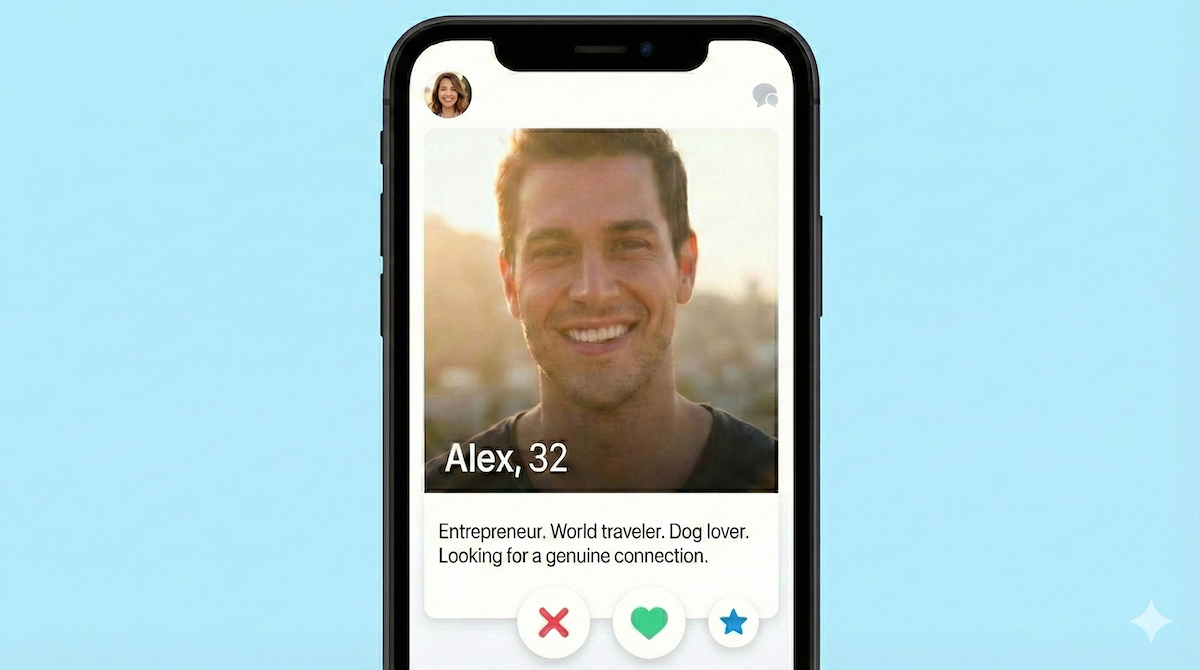
Stage 1: The Setup. Scammers create fake profiles using stolen photos or AI-generated images that don't correspond to any real person. Common personas include military personnel deployed overseas, offshore oil rig workers, international executives, doctors with humanitarian organizations, and remote engineers — all cover stories that explain why they can't meet in person.
Stage 2: The Grooming (Love Bombing). The scammer moves quickly to build emotional intimacy: daily communication, declarations of deep understanding, talk of a shared future. A key tactic is moving the conversation off the dating platform to WhatsApp, Telegram, or Google Chat, removing it from the platform's fraud detection and making outside intervention harder.
Stage 3: The Ask. After trust is built, financial requests begin — framed as emergencies or opportunities. "I was in a car accident and the hospital won't release me without a $3,200 payment upfront. My wallet was in the car and I can't access my bank." Payment methods are always difficult to reverse: wire transfers, cryptocurrency, or gift cards.
Stage 4: The Escalation (Pig Butchering). Increasingly, romance scams serve as the entry point for crypto investment fraud (sha zhu pan, or "pig butchering"). The scammer introduces a fake cryptocurrency platform showing impressive returns, encouraging larger investments. "My uncle taught me about crypto trading and I've made $47,000 in three months. I set up a special account for us." Crypto-related romance fraud accounted for $9.3 billion of 2024 reported losses.
Five Romance Scam Patterns
The Military Deployment: Claims to be a service member stationed overseas who can't access bank accounts or meet in person due to military restrictions. Requests help with "leave papers," medical bills, or shipping costs.
The Crypto Investment Pivot: After weeks of romantic conversation, casually mentions cryptocurrency trading success and offers to help you invest together. A small initial deposit grows into major losses on a fake platform.
The Medical Emergency: A sudden health crisis creates urgency and emotional pressure. The scammer claims to be hospitalized in a foreign country without insurance, framing the request as life or death.
The Deepfake Video Call: As awareness grows that scammers avoid video calls, some now use deepfake technology. "Let's do a video call tonight! I need you to download this app called SecureVid so we can have a private call." The app delivers a deepfake video stream.
The Gift Card Request: Asks for help purchasing gift cards for a seemingly reasonable purpose, then requests the codes. Gift cards function like untraceable cash once the codes are shared. Learn exactly why scammers prefer gift cards in our full guide: Romance Scam Gift Cards: Why They Ask and What to Do.
How AI Is Changing Romance Scams
Artificial intelligence has fundamentally altered the romance scam landscape. Scam operations now use "AI Rooms" with real-time deepfake face-swapping for video calls, making the traditional advice to "request a video call to verify" unreliable. Large language models without safety guardrails generate emotionally convincing, personalized messages at scale across dozens of simultaneous victims. Impersonation scams surged 1,400% in 2025, and Gen Digital blocked over 17 million dating scam attacks in Q4 2025 alone (a 19% quarterly increase). The average scam payment jumped 253% to $2,764 as AI-enhanced personalization makes these scams more persuasive than ever.
Warning Signs
Watch for these red flags: they can never meet in person or always cancel video calls; the relationship moves unusually fast; they push to move the conversation off the dating platform; their story has inconsistencies or their photos show up under different names in reverse image searches; they ask for money in any amount; they get defensive or manipulative when questioned; their profile seems suspiciously perfect. For a detailed breakdown of each warning sign, see our guide: Is My Online Partner a Scammer? Key Red Flags.
What to Do If You Suspect a Romance Scam
Stop all communication and block the person on all platforms. Do not send any more money. Save screenshots of conversations, profile information, and any financial transaction records. Report to the FTC at ReportFraud.ftc.gov, the FBI's IC3 at ic3.gov, and the dating platform. Contact your financial institution immediately — wire transfer recalls must be initiated within hours. Seek emotional support: romance scam victims experience real grief, and the AARP Fraud Watch Network helpline can connect you with support resources. For the exact language scammers use at every stage, see our guide on common romance scam scripts.
Get a step-by-step guide: How to Report a Romance Scam
Who Is Most Vulnerable?
Seniors are disproportionately targeted because they often have retirement savings and may be recently widowed or divorced. Older adults lost $2.4 billion to fraud in 2024. But younger adults are increasingly targeted through dating apps: a Norton study found nearly half of online daters have been targeted by dating scams, with 74% of those targeted reporting they fell victim to some degree. Learn why older adults are disproportionately targeted in our full guide: Why Seniors Are Increasingly Targeted by Romance Scams.
If you know someone who may be the target or victim of a Romance scam see our full guide on how to help: How to Help a Loved One Caught in a Romance Scam.

Related Articles
.png)
.png)
You can't always be there. Savi can.