4 Scams Hitting Older Adults Right Now — and How to Stop Them
.png)
October is Cybersecurity Awareness Month and a good moment to talk about a threat that's grown impossible to ignore: scams aimed at older adults. In 2025, Americans 60 and over lost an estimated record $81.6 billion, according to the FTC. And in a recent national cyber safety assessment, adults 65+ were the group most worried about online safety, yet 1 in 3 people said they don't know where to turn for trustworthy advice.
Today's scams are so dangerous because AI makes them look real. We can no longer expect them to contain clumsy typos as clues. Scammers now send flawless texts, spoof familiar phone numbers, clone voices, and build fake websites that look just like the real thing.
Scamwise.com is a free scam-checker used by hundreds of thousands of people every month, and nearly half of everything people check is found to be most likely or definitely a scam. Which means that when people get a funny feeling about something and check it, half of the time they are right. It's always a good idea to take another look and get a second opinion before taking any action.
Four scams hitting older adults hardest right now
- Impersonation. A call, text, or email claiming to be your bank, Medicare, Social Security, or a company's "support" team — pressuring you to "verify" details or move money.
- The family emergency. A panicked message that a loved one, such as a grandchild, is in trouble and needs money right away (now often using AI-cloned voices).
- Fake delivery texts. "There's a problem with your package — click to reschedule." A favorite during the upcoming holiday season.
- Tech-support pop-ups. A scary warning that your computer is infected, urging you to call a number and hand over access.
The good news: a few simple habits stop most of these
- Slow down. Every scam runs on urgency. If a message is rushing you to act right now, that's the red flag.
- Verify on your own. Don't use the number or link they sent. Hang up and call the real number on your card, bill, or the company's official website.
- Never pay with gift cards, wire transfers, or crypto. No legitimate company or agency will ever ask you to do this.
- When you're not sure, check it. Paste any suspicious text, link, email, or phone number into Scamwise.com for a free, instant answer — no signup required.
You don't have to figure this out alone. Whether it's a suspicious text or a call that feels off, a few seconds to check can save you thousands. Stay curious, stay skeptical, and when in doubt — check it.
Try it free at scamwise.com.

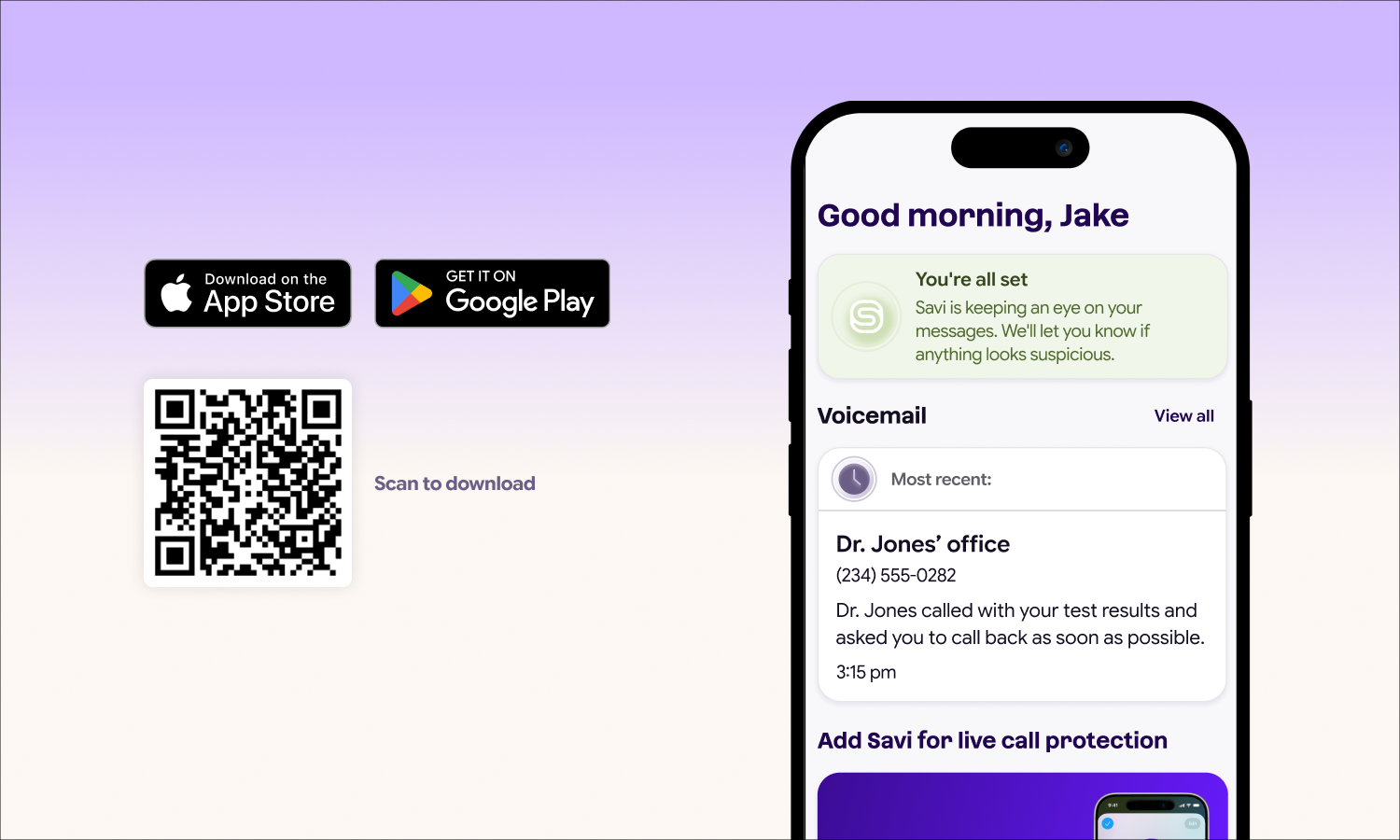
Get the free Scamwise app.
The only app built to protect your whole family from scams across calls and texts — 24/7. Get started for free.
Related Articles
.png)
.png)
You can't always be there. Savi can.