Family Emergency Scam
A family emergency scam is when someone pretends to be a relative in crisis—like a child or grandchild—to make you send money urgently by exploiting your instinct to help loved ones.
What Is a Family Emergency Scam?
A family emergency scam is when a scammer contacts you pretending to be a family member—often a grandchild, child, or close relative—claiming to be in an urgent crisis and asking you to send money immediately. These scams exploit the natural instinct to help loved ones in distress.
What This Looks Like in Real Life
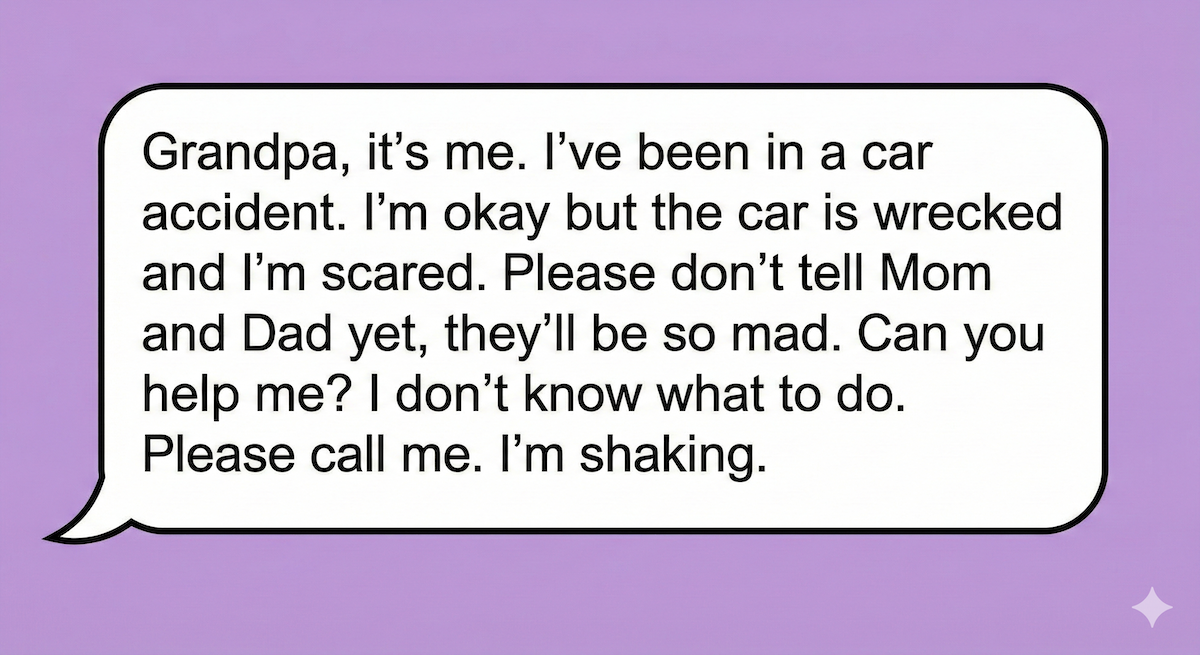
The phone rings. A panicked voice says, "Grandma, it's me. I've been in a car accident and I'm in the hospital. Please don't tell Mom and Dad—I need you to send money for the medical bills right away." The voice sounds familiar. The story is believable. The urgency is overwhelming. But it's not your grandchild. It's a scammer who has researched your family or is simply hoping you'll fill in the blanks yourself.
Because they often target older adults, family emergency scams are also known as grandparent scams.
Why Family Emergency Scams Are So Effective
Family emergency scams succeed because they exploit powerful emotions:
- Love and protective instincts: The desire to help a family member in trouble overrides caution
- Urgency and panic: The crisis scenario prevents victims from thinking clearly
- Secrecy requests: Asking victims not to tell other family members prevents verification
- Authority figures: Scammers may hand off the call to a fake "lawyer," "doctor," or "police officer" to add credibility
- Personal information: Details gathered from social media make the impersonation convincing
Common Family Emergency Scenarios
Scammers use a variety of fake emergencies, with some of the most common fake family emergencies being:
- Car accident: "I was in a crash and need money for medical bills or car repairs"
- Arrest or jail: "I've been arrested and need bail money—please don't tell my parents"
- Hospitalization: "I'm in the hospital in another city and need money for treatment"
- Stranded while traveling: "I'm stuck in another country and lost my wallet—I need money to get home"
- Legal trouble:"I hit someone with my car and need to pay them to avoid being sued"
- Kidnapping: "Your grandchild has been kidnapped—pay the ransom or they'll be hurt"
- DUI or drug charges: "I need money for a lawyer before my court date tomorrow"
How the Scam Works
Step 1: Initial contact
The scammer calls (or sometimes texts) claiming to be your relative. They may say "Grandma, it's me" and let you guess the name, or they may already know family members' names from social media research.
Step 2: The emergency story
They describe an urgent situation that requires immediate financial help. The story includes details designed to explain why they sound different ("I broke my nose in the accident") or why they're calling from an unfamiliar number.
Step 3: The secrecy request
The scammer asks you not to tell other family members, often claiming embarrassment or fear of getting in trouble. This prevents you from verifying the story.
Step 4: The handoff
To add legitimacy, the scammer may transfer you to an accomplice posing as a lawyer, bail bondsman, doctor, or police officer who confirms the story and provides payment instructions.
Step 5: The payment demand
You're asked to send money through methods that are difficult to trace or reverse—gift cards, wire transfers, cryptocurrency, or cash sent via courier.
Step 6: Additional requests
If you pay once, scammers often call back with new "complications" requiring more money until you realize it's a scam or run out of funds.
The Rise of AI Voice Cloning
Modern family emergency scams have become more convincing with AI voice cloning technology. Scammers can now:
- Capture a few seconds of someone's voice from social media, voicemail, or recorded calls
- Use AI software to generate a synthetic voice that sounds exactly like your family member
- Create real-time voice conversations that are nearly indistinguishable from the real person
This technology makes it even more critical to verify emergencies through independent means—not by trusting the voice you hear.
Warning Signs of a Family Emergency Scam
- An unexpected call from a "family member" in crisis
- The caller asks you to guess who they are rather than identifying themselves
- Excuses for why their voice sounds different
- Urgency to act immediately without time to verify
- Requests to keep the situation secret from other family members
- Demands for payment via gift cards, wire transfers, or cryptocurrency
- The caller asks you to stay on the line while you get money
- A "lawyer" or "official" takes over the call to collect payment
- Resistance or excuses when you try to verify the story independently
- Threats of harm, arrest, or other consequences if you don't pay immediately
How to Protect Yourself and Your Family

Establish verification protocols
- Create a family code word or phrase that only your family knows. Anyone claiming to be family should be able to provide it.
- Agree that real emergencies will never require gift card payments
- Discuss these scams with elderly relatives who are frequently targeted
Verify before sending money
- Hang up and call your family member directly at a number you already have
- Contact other family members to confirm the emergency
- Ask personal questions only the real person would know
- Don't trust caller ID—scammers can spoof phone numbers
Slow down
- Scammers create urgency to prevent you from thinking clearly
- Legitimate emergencies can wait the few minutes it takes to verify
- Anyone pressuring you not to hang up or contact other family is likely a scammer
Limit information sharing
- Be cautious about what you share on social media—scammers research family relationships, names, travel plans, and locations
- Review privacy settings on social media accounts
- Consider what information is publicly accessible
Recognize payment red flags
- No legitimate emergency is resolved through gift cards, wire transfers, or cryptocurrency
- Real lawyers, hospitals, and bail bondsmen don't demand payment through untraceable methods
- Use a trusted free scam checker like Scamwise to review suspicious messages, calls, or emails before responding
What to Do If You're Targeted
If you receive a suspicious call:
- Stay calm and don't let emotion drive your decisions
- Don't confirm any information—let the caller provide details
- Hang up and independently verify by calling your family member directly
- Contact other relatives to check on the supposed "victim"
- Report the attempted scam to the FTC at reportfraud.ftc.gov
If you've already sent money:
- Contact your bank, credit card company, or payment service immediately
- If you paid with gift cards, contact the gift card company and report the fraud
- File a report with the FTC at reportfraud.ftc.gov
- File a police report with your local department
- Warn other family members so they don't fall victim to follow-up calls
- Don't be embarrassed—these scams are sophisticated and target caring people
How to Talk to Elderly Relatives About This Scam
- Have the conversation before a scam happens, not after
- Explain how the scam works without being condescending
- Establish a family code word together
- Reassure them that real emergencies don't require secrecy from family
- Encourage them to always hang up and call the family member directly
- Let them know that asking for verification isn't rude—it's smart
- Make it clear that you would never ask for gift cards in an emergency
FAQs
What is a family emergency scam?
A family emergency scam is when a scammer pretends to be a relative—often a grandchild—claiming to be in an urgent crisis like an accident, arrest, or medical emergency, and asks you to send money immediately.
Why do scammers ask for gift cards or wire transfers?
Gift cards, wire transfers, and cryptocurrency are nearly impossible to trace or recover once sent. Legitimate emergencies are never resolved through these payment methods.
How can I verify if a family emergency call is real?
Hang up and call your family member directly using a number you already have. Contact other relatives to verify the story. Use a family code word established in advance for emergencies.
You can't always be there. Savi can.